
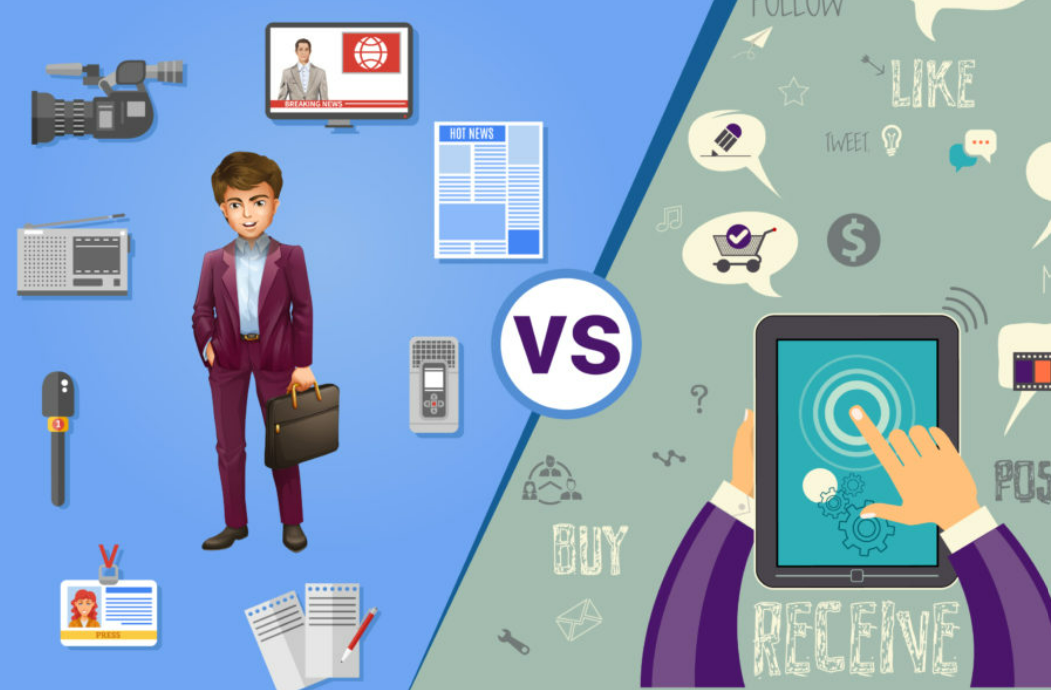
Digital Marketing vs. Traditional Marketing: Understanding the Differences, Benefits, and Future of Modern Marketing
Introduction
Marketing has always been an essential part of business growth. Whether a company is launching a new product, building brand awareness, generating leads, or entering a new market, effective marketing helps connect businesses with the right audience. However, the way businesses communicate with customers has changed dramatically over the years.
Traditional marketing methods such as television advertisements, newspapers, magazines, billboards, radio, brochures, direct mail, and outdoor advertising were once the primary ways for businesses to reach potential customers. Today, digital marketing has transformed the marketing landscape through websites, search engines, social media, email marketing, content marketing, online advertising, marketing automation, and data analytics.
This does not mean traditional marketing has disappeared. Instead, businesses now have more channels than ever to communicate with their audiences. The real question is no longer whether digital marketing is better than traditional marketing, but rather which approach is more effective for a particular business, audience, objective, and budget.
Understanding the differences between digital and traditional marketing can help organizations develop more effective marketing strategies and create a balanced approach that combines the strengths of both.
What Is Traditional Marketing?
Traditional marketing refers to marketing techniques that existed before the widespread adoption of the internet and digital technologies. These methods generally use physical or broadcast-based communication channels to reach a large audience.
Common examples include:
- Television advertising
- Radio advertising
- Newspaper advertisements
- Magazine advertisements
- Billboards and outdoor advertising
- Flyers and brochures
- Direct mail
- Catalogues
- Business cards
- Events and trade shows
- Print posters
- Telephone marketing
Traditional marketing is often associated with one-way communication. A company creates a message and distributes it through a particular channel, while the audience generally has limited opportunities to immediately respond or interact with that message.
For example, a company may purchase a billboard advertisement in a busy city location. Thousands of people may see the advertisement, but the company may not know exactly how many people noticed it, how many became interested, or how many eventually purchased the product.
Despite these limitations, traditional marketing continues to have value, particularly for businesses targeting local audiences or demographic groups that respond well to offline communication.
What Is Digital Marketing?
Digital marketing refers to marketing activities conducted through digital channels and technologies. It allows businesses to promote their products and services through internet-connected devices and digital platforms.
Major digital marketing channels include:
- Search engine optimization (SEO)
- Search engine marketing (SEM)
- Social media marketing
- Email marketing
- Content marketing
- Pay-per-click advertising
- Display advertising
- Video marketing
- Influencer marketing
- Affiliate marketing
- Marketing automation
- Online public relations
- Website and landing-page marketing
- Mobile marketing
- Account-based marketing
- Lead-generation campaigns
Digital marketing allows companies to communicate with highly specific audiences and measure the performance of campaigns in considerable detail.
For example, a B2B software company can create a LinkedIn campaign targeting professionals based on factors such as job title, industry, company size, and location. The company can then monitor impressions, clicks, engagement, leads, conversions, and campaign costs.
This level of targeting and measurement has made digital marketing particularly important for modern businesses.
Digital Marketing vs. Traditional Marketing
The biggest difference between digital and traditional marketing is the medium through which the audience is reached.
Traditional marketing relies heavily on offline channels, while digital marketing uses online platforms and technologies.
However, the differences go much deeper than the communication channel.
1. Audience Targeting
Traditional marketing can reach large audiences, but targeting can be relatively broad.
For example, a television advertisement may be shown to thousands or millions of viewers. Although advertisers can select programs based on audience demographics, they generally have less control over exactly who sees the advertisement.
Digital marketing provides much more detailed targeting.
Businesses can target audiences based on:
- Age
- Location
- Interests
- Job roles
- Industry
- Online behavior
- Search intent
- Previous website activity
- Purchasing behavior
- Device usage
- Engagement history
This is especially valuable for B2B companies because they can focus marketing activities on decision-makers, business owners, executives, and professionals.
2. Cost
Traditional marketing can require significant investment.
Television commercials, billboards, newspaper advertisements, radio campaigns, print materials, and direct-mail campaigns can become expensive, particularly when businesses want to achieve broad reach.
Digital marketing offers greater flexibility.
A business can start with a relatively small advertising budget and gradually increase spending based on campaign performance.
For example, a company may start a Google Ads or social media campaign with a controlled daily budget. If the campaign produces profitable leads, the company can increase the investment.
However, digital marketing is not automatically inexpensive. Competitive industries can have high advertising costs, while professional SEO, content marketing, website development, marketing automation, and paid campaigns can require substantial investment.
The key advantage is that digital marketing often provides greater control over how the budget is allocated.
3. Measurement and Analytics
One of the biggest advantages of digital marketing is measurement.
Traditional marketing can be difficult to measure accurately. A company may know that thousands of people received a newspaper advertisement, but determining how many customers were directly influenced by that advertisement can be challenging.
Digital marketing provides extensive data.
Businesses can track:
- Website visitors
- Page views
- Click-through rates
- Conversion rates
- Cost per click
- Cost per lead
- Customer acquisition cost
- Email open rates
- Email click rates
- Social media engagement
- Landing-page performance
- Lead sources
- Sales conversions
- Return on advertising spend
This information allows marketers to understand what is working and what needs improvement.
4. Communication and Engagement
Traditional marketing is generally one-way communication.
A customer sees an advertisement, reads a brochure, hears a radio commercial, or notices a billboard.
Digital marketing enables two-way and multi-way communication.
Customers can:
- Comment on social media posts
- Share content
- Send direct messages
- Respond to emails
- Submit website forms
- Participate in webinars
- Download resources
- Write reviews
- Ask questions
- Interact with chatbots
This interaction helps companies build stronger relationships with their audiences.
5. Speed and Flexibility
Traditional advertising campaigns can take considerable time to create and distribute.
For example, a magazine advertisement may need to be planned weeks or months before publication.
Digital marketing campaigns can be created, launched, modified, and optimized much faster.
If a digital advertisement is not performing well, marketers can change:
- The headline
- Creative design
- Audience
- Call-to-action
- Landing page
- Advertising budget
- Keywords
- Ad placement
This flexibility makes digital marketing particularly useful in competitive markets.
6. Brand Awareness
Traditional marketing can be highly effective for building mass awareness.
A billboard in a high-traffic location, a television commercial, or a radio campaign can expose a brand to a large number of people.
Digital marketing can also build brand awareness, but it allows businesses to combine awareness with measurable engagement.
For example, a company can publish educational articles, videos, social media content, webinars, and industry reports to establish itself as a trusted authority.
7. Personalization
Personalization is another major advantage of digital marketing.
Instead of sending the same message to everyone, marketers can create different experiences for different audience segments.
For example:
A visitor who downloads a whitepaper could receive a follow-up email.
A customer who previously purchased a product could receive recommendations for related products.
A B2B prospect who visits a pricing page could be placed into a targeted remarketing campaign.
This type of personalized communication is much more difficult to execute at scale through traditional marketing.
Advantages of Traditional Marketing
Although digital marketing has become extremely important, traditional marketing still offers several advantages.
Strong Local Reach
Local businesses can benefit from newspapers, flyers, radio advertisements, local events, and outdoor advertising.
For example, a restaurant, real estate developer, educational institution, or retail store may use local outdoor advertising to reach people within a specific geographic area.
Tangible Marketing Materials
Printed brochures, business cards, catalogues, and flyers provide customers with physical materials they can keep.
In certain industries, physical marketing materials can contribute to credibility and professionalism.
Mass Exposure
Television, radio, newspapers, and outdoor advertising can provide broad exposure.
Brands with large marketing budgets can use these channels to establish strong public visibility.
Established Consumer Trust
Some audiences continue to trust established offline media formats.
Newspapers, magazines, television channels, industry events, and physical publications can provide credibility, particularly when the audience is accustomed to consuming information through those channels.
Advantages of Digital Marketing
Digital marketing provides several advantages that have made it an essential component of modern business strategies.
Global Reach
A website can be accessed by customers from different cities, states, and countries.
This makes digital marketing particularly useful for companies that want to expand beyond their local markets.
Precise Targeting
Digital platforms allow marketers to target specific customer segments rather than communicating with an undifferentiated mass audience.
Real-Time Optimization
Campaign performance can be monitored and adjusted quickly.
Marketers can identify underperforming campaigns and make changes without waiting for the campaign to finish.
Better Data
Digital marketing provides detailed performance information that can support data-driven decision-making.
Continuous Engagement
Social media, email, websites, communities, and content platforms allow companies to communicate with customers continuously.
Limitations of Traditional Marketing
Traditional marketing also has disadvantages.
The first major limitation is measurement. It can be difficult to determine exactly how many customers were influenced by a specific offline campaign.
Traditional marketing can also require higher upfront costs. Printing, production, media placement, distribution, and physical advertising space can become expensive.
Another limitation is limited flexibility. Once a newspaper advertisement has been printed or a billboard campaign has been installed, changing the message may require additional costs.
Traditional marketing can also provide limited personalization because the same advertisement is generally presented to a broad audience.
Limitations of Digital Marketing
Digital marketing is powerful, but it is not without challenges.
The digital environment is highly competitive. Customers are exposed to thousands of advertisements, emails, videos, social media posts, and online messages every day.
This creates a significant challenge for marketers: attention is becoming increasingly difficult to capture.
Digital marketing also requires specialized knowledge. Businesses may need professionals with expertise in SEO, paid advertising, content creation, analytics, social media, email marketing, website development, design, and marketing automation.
Privacy and data protection are also important considerations. Businesses must handle customer information responsibly and comply with applicable regulations and platform policies.
Another challenge is constant change. Search algorithms, advertising platforms, social media trends, technologies, and consumer behavior can change rapidly.
Which Marketing Strategy Is Better?
There is no universal answer.
The right marketing strategy depends on several factors:
- Business objectives
- Target audience
- Industry
- Geographic market
- Marketing budget
- Product or service
- Customer buying journey
- Sales cycle
- Brand positioning
- Available resources
For a local restaurant, outdoor advertising and social media may work together effectively.
For a B2B technology company, SEO, LinkedIn marketing, email campaigns, webinars, content syndication, and account-based marketing may be more appropriate.
For a consumer brand launching a nationwide product, television, outdoor advertising, influencer marketing, social media, search advertising, and retail marketing could work together.
Therefore, businesses should not automatically choose digital marketing simply because it is modern. They should select channels based on where their customers actually spend their time and how they make purchasing decisions.
The Rise of Integrated Marketing
Modern businesses are increasingly combining traditional and digital marketing instead of treating them as completely separate strategies.
This approach is commonly known as integrated marketing.
For example, a company launching a new product could use:
Television advertising to create broad awareness.
Billboards to reinforce brand visibility.
Social media to generate conversations.
Google Ads to capture active search demand.
Email marketing to nurture interested prospects.
Content marketing to educate potential customers.
Landing pages to generate leads.
CRM systems to manage prospects.
Analytics platforms to measure results.
Each channel performs a different function, but together they create a connected customer journey.
Digital Marketing and Traditional Marketing in B2B
B2B marketing has changed significantly because business buyers now conduct extensive research before speaking with sales representatives.
A potential buyer may read articles, compare vendors, watch product demonstrations, download reports, attend webinars, review case studies, and search for customer opinions before making a decision.
This makes digital marketing extremely valuable for B2B companies.
A strong B2B marketing strategy may include:
- Search engine optimization
- LinkedIn marketing
- Email marketing
- Lead generation
- Account-based marketing
- Content syndication
- Whitepapers
- Case studies
- Webinars
- Landing pages
- Marketing automation
- Paid search
- Retargeting
- CRM integration
However, traditional B2B marketing still has an important role.
Industry conferences, exhibitions, networking events, printed brochures, corporate presentations, direct mail, and face-to-face meetings can help establish relationships and build trust.
The strongest B2B strategies often combine digital research and offline relationship building.
The Role of Artificial Intelligence
Artificial intelligence is changing both digital and traditional marketing.
In digital marketing, AI can help businesses analyze customer behavior, generate content ideas, personalize communication, identify audience segments, optimize advertising campaigns, automate customer interactions, and predict potential customer behavior.
AI-powered tools can also support:
- Marketing automation
- Chatbots
- Customer segmentation
- Predictive analytics
- Content recommendations
- Lead scoring
- Email personalization
- Ad optimization
- Customer service
Traditional marketing can also benefit from AI through audience research, campaign planning, media optimization, customer insights, and creative development.
As AI becomes more accessible, marketers will increasingly focus not only on creating content but also on using technology to deliver the right message to the right audience at the right moment.
The Future of Marketing
The future of marketing will not be defined by digital marketing alone.
Instead, marketing will become increasingly integrated, data-driven, personalized, and customer-focused.
Businesses will continue to use traditional channels where they provide value while expanding their digital presence where customers are more active.
The future marketer will need to understand both creativity and technology.
Successful marketing teams will combine:
Creativity + Data + Technology + Strategy + Customer Understanding
Companies that understand their customers and build consistent experiences across multiple channels will have a significant advantage.
Conclusion
Digital marketing and traditional marketing are not necessarily competitors. They are different approaches that can complement each other when used strategically.
Traditional marketing provides strong opportunities for mass awareness, local visibility, physical engagement, and brand recognition. Digital marketing provides precise targeting, measurable performance, personalization, flexibility, and global reach.
The most effective marketing strategy is therefore not about choosing between traditional and digital marketing. It is about understanding the audience, defining clear objectives, selecting the right channels, and creating a consistent customer experience.
As technology continues to evolve, businesses will have access to even more sophisticated marketing tools. However, the fundamental principle of marketing will remain the same: understand your customer, provide value, communicate effectively, and build trust.
Digital platforms may change. Advertising technologies may change. Consumer behavior may change. But businesses that consistently put their customers at the center of their marketing strategy will remain better positioned for sustainable growth.
Comments are closed.